
“Die-hard clichés”
Which is better: a masonry or a wooden house?
This is a question that often resonates in our minds and involves all of us.
In recent years, thanks to the advent of bio-construction and eco-friendly building, new trends have overturned both the real estate and construction markets.
Nowadays, when building a house, much attention is paid to materials, new technologies, with a nod to environmental preservation, the impact on the planet, and the healthiness of residential constructions.
Wood, without a doubt, is one of the most used and talked-about alternatives.
Years ago, few would have thought of building a wooden house, especially on plains where they were never seen. It is more common to find wooden houses in the mountains, built since ancient times with the ground floor made of stone to keep the wood as far away from dirt and humidity as possible.
Premise:
What differentiates between a prefabricated wooden house and a traditional masonry one is its structure; everything else (foundations, insulation, systems, etc.) is essentially the same in both construction solutions.
Let’s analyze the various differences.
The main element that distinguishes the characteristics of the two solutions is the load-bearing structure. Apart from the load-bearing structure consisting of brickwork, slabs, and roofing, there is no difference between the two types of houses.
Foundations: both have reinforced concrete foundations;
Walls: one is in stonework; the other is in wood or wood and rock wool;
Structure (slabs and walls): pillars and beams in the case of reinforced concrete, in wood for the other;
Insulation: thermal insulation for both solutions;
Systems: both masonry and wooden houses can have the same type of systems;
Internal wall finishing: plaster on brickwork, plasterboard sheets on wooden structure;
Fixtures: both types have high-energy efficient wooden fixtures;
Screeds under flooring: in both cases, they will be made of concrete, sand, and cement;
Finishing materials: in both cases, the same floors and finishing materials such as wall coverings, bathroom fixtures, etc., can be chosen.
Except for the structure, the differences between prefabricated wooden houses and masonry houses are truly minimal. This helps you understand that when you hear about a wooden house, it’s not entirely made of wood.
To summarize, there are two types of construction for wooden houses:
– Houses with both load-bearing structure and wall cladding entirely in wood;
– Houses with a wooden frame structure and cladding in insulating materials like rock wool or wood fiber.
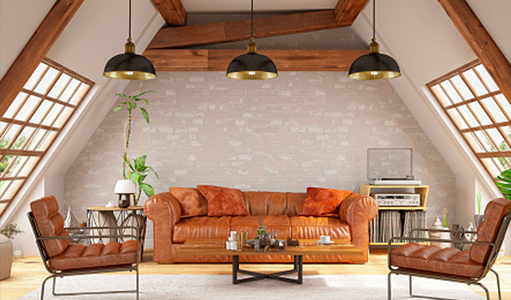
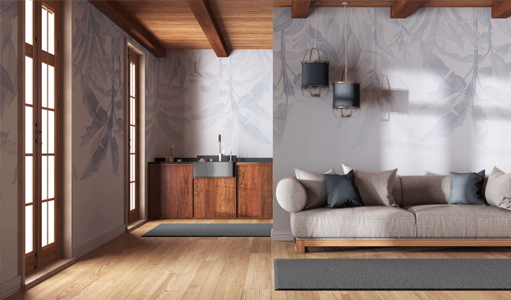
Is wood more natural than brick?
Whether it is a product found in nature, we certainly can and must say that wood undoubtedly reigns supreme.
- Ecological and eco-sustainable,
- Ductile;
- Sturdy and seismic-resistant,
- Aesthetically pleasing,
- Hghly insulating, keeps the house warm in winter and cool in summer,
- Natural thermal insulator, it regulates the humidity in the air and promotes internal well-being of the house.
Does wood rot?
How can you build an entire house with this material which is usually associated with classic masonry?
Wood destined for construction requires appropriate treatments to guarantee greater resistance over time and protect it from attacks by aphids, mold, bacteria, etc., and at the same time, flame-retardant substances are used to maximize fire resistance.
Is building a wooden house faster?
Yes, we can certainly say that building a wooden house is faster than building a traditional masonry house.
The wooden house is prefabricated, meaning it’s made in pieces in the factory and then assembled on-site, reducing the execution times of the structural part.
However, the same amount of time is needed for the realization of the foundations, the installation of systems and fixtures, and all the finishing works that are normally required to complete a house in the rough.
Project timelines must also be added, which depend on the choice of the designer, the formulation of estimates, obtaining permits, and everything concerning the relationship with the company to which the assignment is entrusted.
Do we recommend a wooden or brick house?
The question cannot be answered without first conducting a proper pre-analysis together with the client, based on the set objectives.
What is the use of the house? Year-round or only for a vacation period?
The location? Are there any specific landscape regulatory restrictions in force?
What style do we like best? What thermal comfort do we want to achieve?
What’s the size of the property and the area to be built on?
What budget do you have available?
Certainly, in some respects, we can say that:
- Construction times on-site are shorter;
- The thickness of the walls is more contained, with equal insulation;
- The construction is more ecological;
- The aesthetics are striking and elegant.
Italy has now reached a high level of know-how in the sector, and there are many companies, architects, and designers who have received international recognition for Italian design of wooden houses.
Wood can offer us much more than what still, to this day, belongs to clichés due to ignorance.
“I love trees. They are like us.
Roots to the ground and
head towards the sky.”
Erri De Luca – writer


